LLM Lens
About
LLM Lens is an advanced agentic system built with LangGraph to audit and optimize web search visibility for AI crawlers and LLM agents.
It coordinates a hierarchical supervisor and specialized subagents:
- Fetch & Render Worker: Uses Playwright to render JavaScript-heavy web applications, inspecting runtime states.
- Report Subagent: Performs a multi-dimension discoverability audit, checking for sitemaps, robots.txt, and llms.txt. It parses WebMCP signals, comparing declarative annotations against runtime-registered browser tools.
- Optimizer Subagent: Generates standard-compliant `llms.txt` and `robots.txt` files custom-tailored to the site profile.
- Validator Subagent: Implements a quality gate checking syntax, structural completeness, and AI readability before deployment.
- PR Exporter Subagent: Connects to the GitHub API to open an automated Pull Request directly to the user's codebase, facilitating seamless deployment.
Served via a modern, interactive Reflex full-stack Python dashboard, the system supports real-time human-in-the-loop adjustments, where users can ask questions or provide natural language feedback to re-optimize generated assets.
Technologies Used
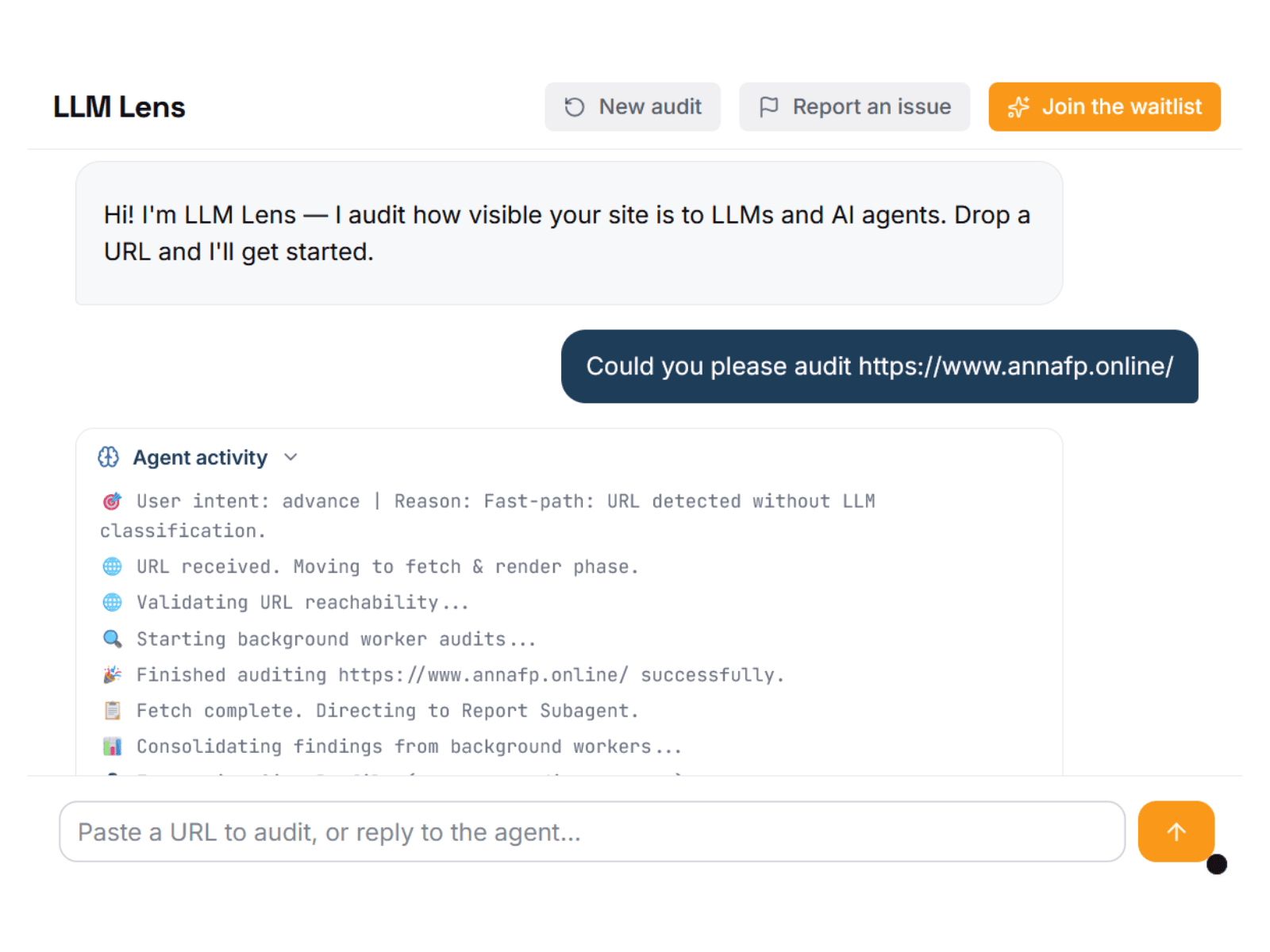
AI Visibility Audit
Enter any URL to run a full discoverability audit. The agent checks robots.txt directives, llms.txt compliance, and WebMCP signals, grading each dimension and streaming progress updates as the audit runs.
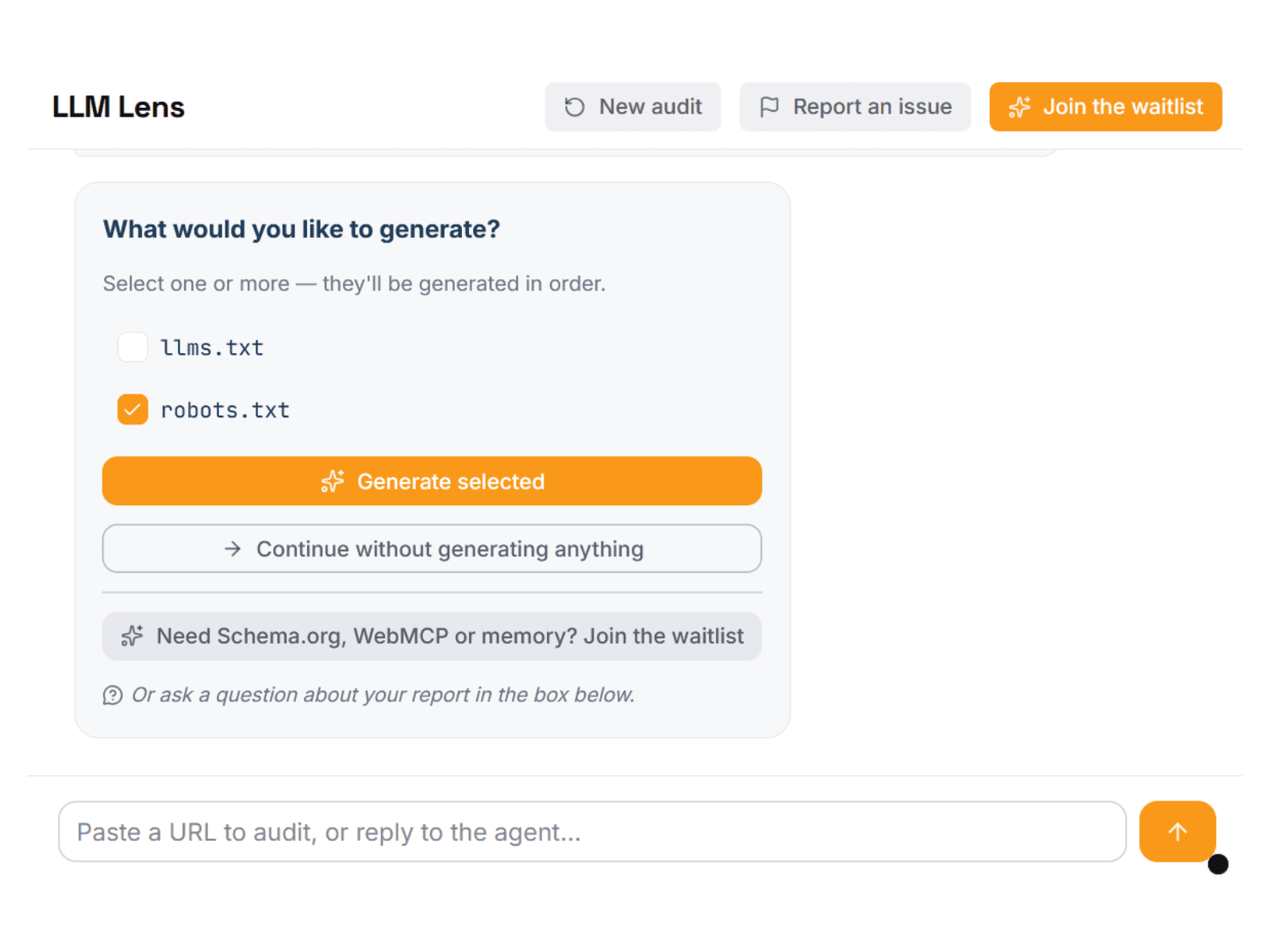
Generate & Refine Artifacts
Select which artifacts to generate based on your audit results. Ask the agent questions about the findings, request changes, and iterate — the agent regenerates only what needs updating.
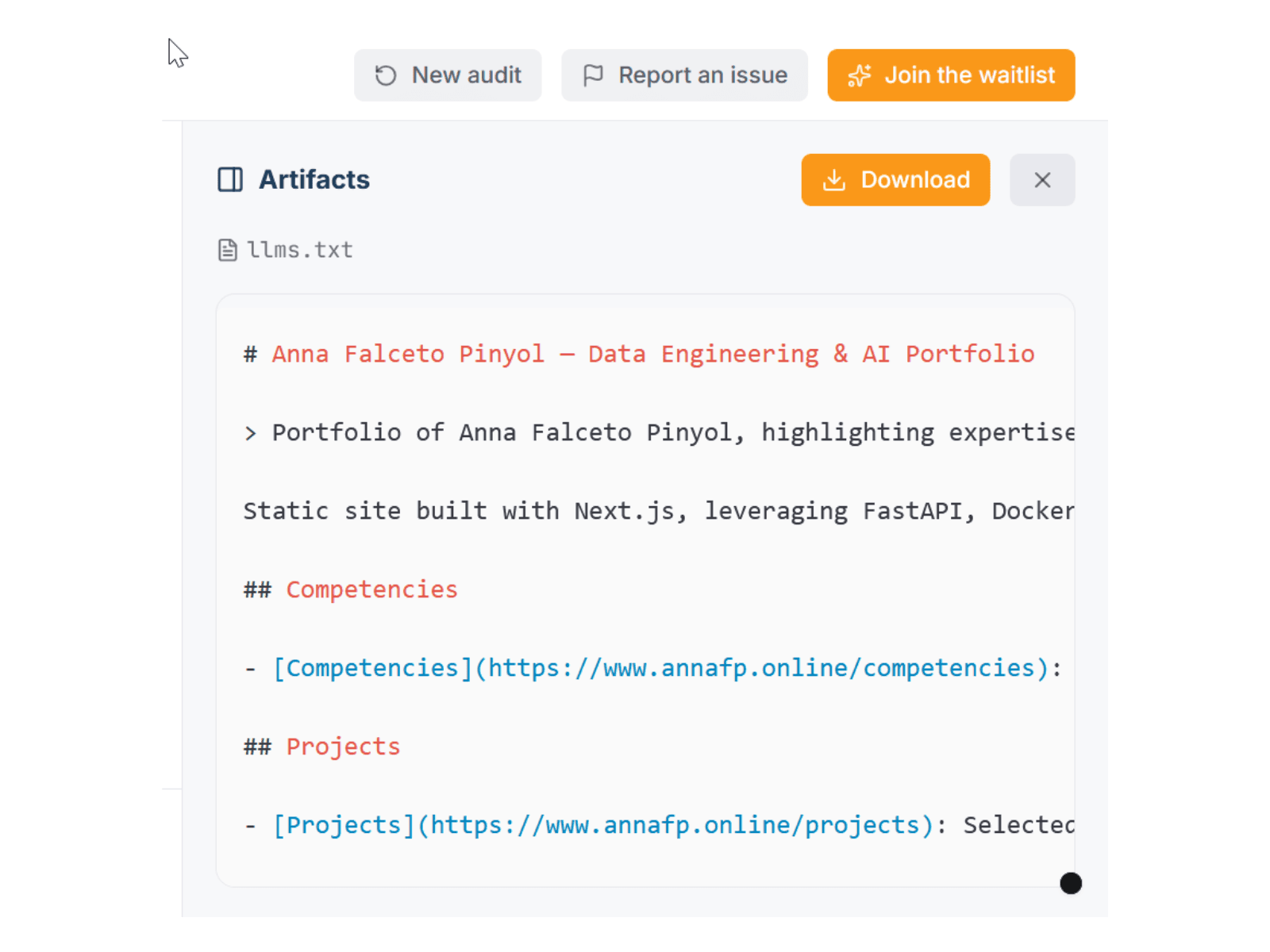
Review & Export
Inspect generated files side-by-side with your chat, with syntax highlighting for each artifact. Download them locally or open an automated GitHub Pull Request to push them directly to your codebase.
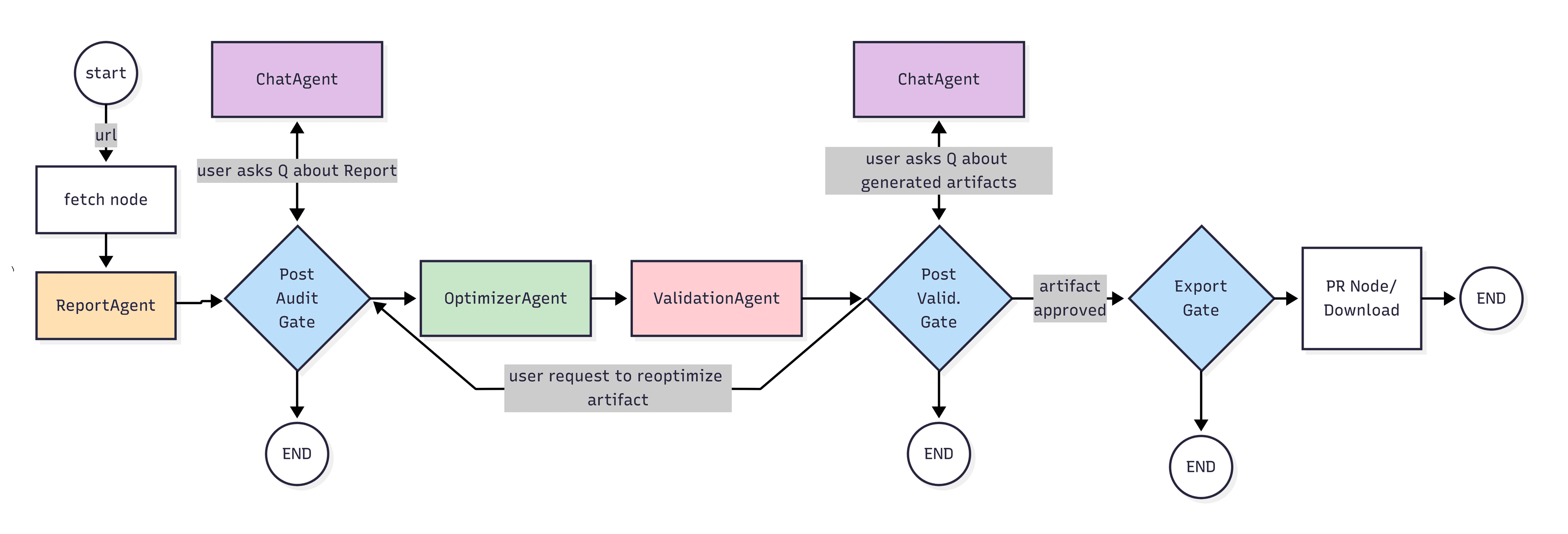
System Architecture Overview
Deterministic supervisor orchestrating three specialized subagents — Report, Optimizer, and Chat — with parallel worker branches scanning SEO and AI-discoverability signals concurrently.
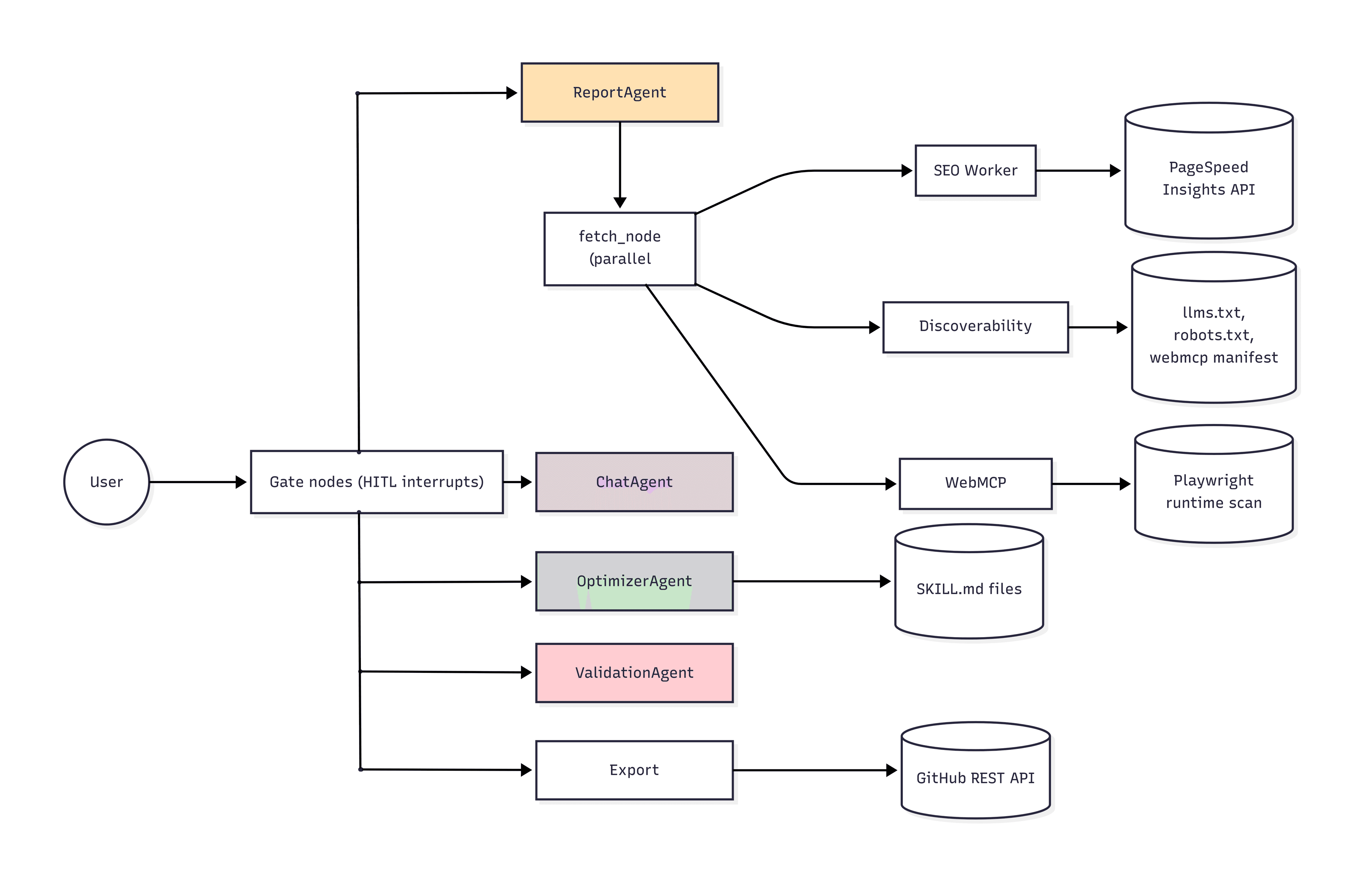
Guided Agent Graph Flow
A guided conversational graph: the agent pauses at key phases to present contextual action menus, classify user intent, and route accordingly — keeping humans in control of every critical decision without breaking the session state.